 English
 العربية
 中文語言
中文語言
 हिंदी भाषा
 हespañol
 русский
 Português
 Le français
 Deutsch
 ภาษาไทย
 Português

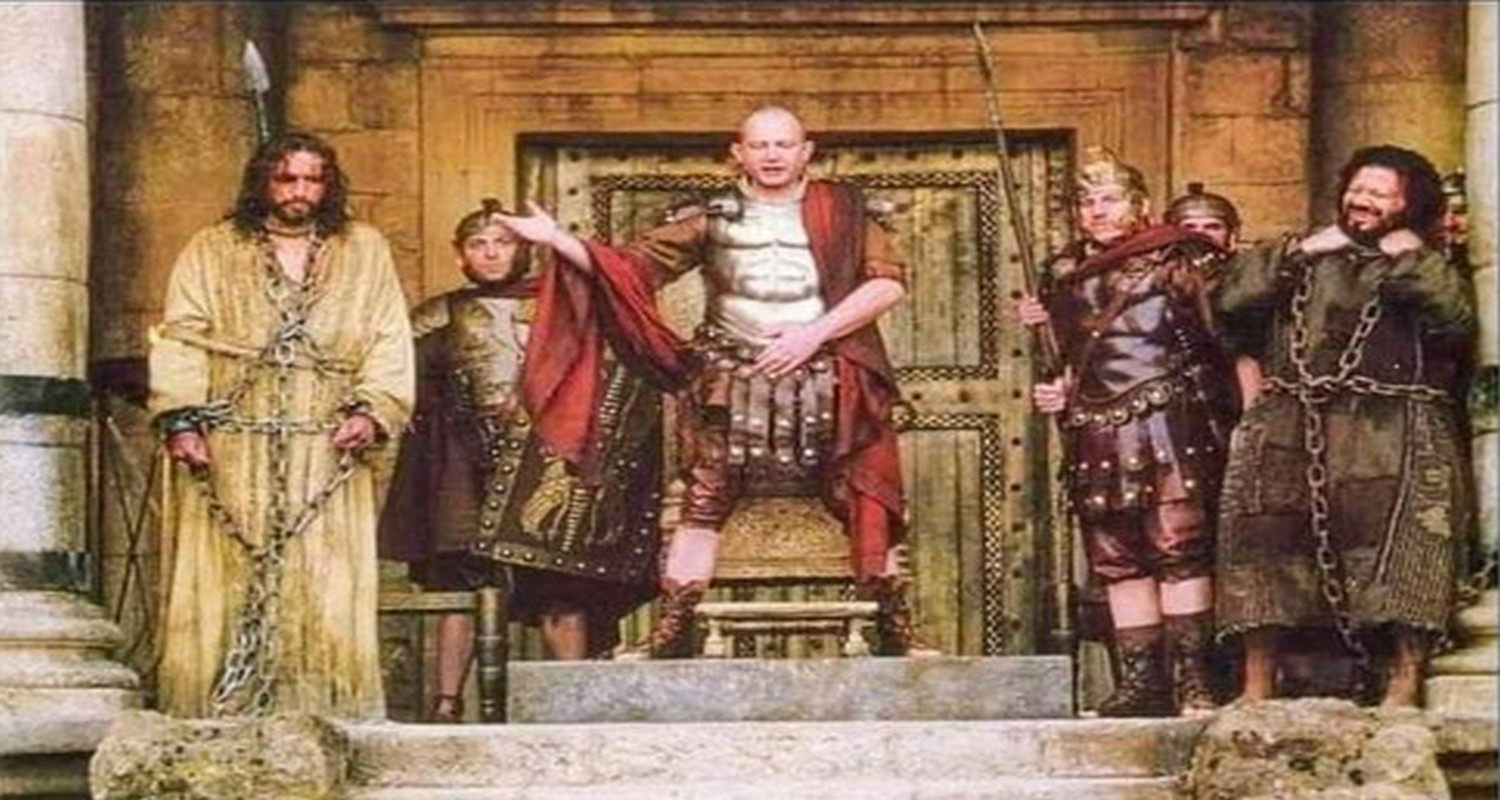
Between Pilate and Herod
On Friday morning, the chief priests and the elders of the people met for a final consultation to put Jesus to death. They bound him, led him away, and handed him over to Pontius Pilate, the Roman governor of Judea.
When they arrived at the Praetorium, they had to explain to the governor what his charges were. They told him that he was a pervert.
Pilate questioned him, but he made no answer. He told them that he had no evidence to accuse him of. However, when they told him that the man was a Galilean under the authority of Herod Antipas, he seized the opportunity of the latter's presence in Jerusalem and sent him to him.
Herod was delighted to see Jesus, hoping that he would perform a miracle before him, but the prisoner made no reply.
This did not please the governor, a fox accustomed to getting what he wanted. How could he not, given that he had robbed his brother's wife and killed John the Baptist after her daughter danced and demanded his head on a platter?
Herod lived a life of endless evil. Not content with his previous sins, that murderous adulterer added yet another even greater one. He despised and mocked Christ, along with his soldiers, dressed Him in a dazzling robe, and sent Him back to Pilate.
Once again, even Pilate, the governor with a history of ferocity, could find no justification for condemning Jesus to death. He wanted to flog Him and release Him, but the crowds insisted on killing Jesus.
Some wanted to do so out of reluctance, while others were forced to do so. Under pressure and incitement from the chief priests and elders, the crowds were enraged, and even those who didn't want to be killed joined the crowd in one way or another.
Pilate offered them another option, linked to the custom of releasing a criminal at the feast: a known criminal named Barabbas or Jesus. They chose to let Barabbas go free.
The rage against Jesus was politically motivated and driven by the religious leaders' jealousy of him. They even preferred to free the infamous murderer Barabbas and thus kill Jesus.
God's voice reached Pilate clearly through his wife, who warned him: "Have nothing to do with that righteous man, for I have suffered many things today in a dream because of him." Pilate simply washed his hands, declaring himself innocent of the blood of Jesus, a pathetic attempt to shift the blame onto others, even though he was the governor and the one who gave the final order.
He wanted to place the full responsibility and blame on the Jews, and the painful, oft-repeated response of the Jews was: "His blood be upon us and upon our children" (Matthew 27:25).
By Brother / Makram Mashreqi

Adicionar Novo Comentário